
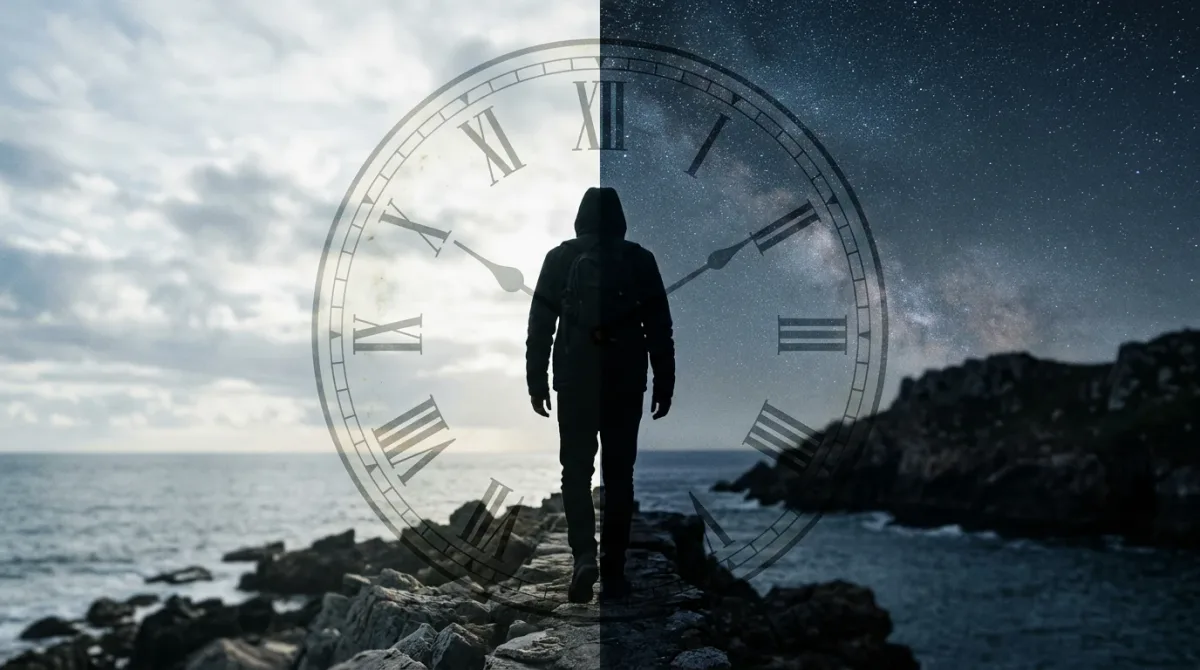
A single night of four hours' sleep reduced natural killer cell activity to 72 percent of normal levels, according to research cited in fatigue-training materials the National Institute for Occupational Safety and Health (NIOSH) built for nurses, last reviewed in 2020. The finding is one measurable sign of what happens when a work schedule fights the body's internal clock, a pattern common on health care's night and rotating shifts.
How does the body's internal clock actually work?
A master pacemaker in the brain's hypothalamus, called the suprachiasmatic nucleus, synchronizes the body's cellular clocks on a cycle that naturally runs slightly longer than 24 hours, according to NIOSH training materials on circadian biology. Light is described as "the strongest cue" for resetting that pacemaker each day, with exercise and melatonin playing smaller supporting roles.
The pacemaker does not just govern sleep. NIOSH's materials describe it as controlling the timing of hormone release, body-temperature rhythms, and digestion, all of which shift on a predictable 24-hour pattern in someone keeping a conventional daytime schedule. Because the internal cycle naturally runs slightly past 24 hours, it depends on a daily reset; without one, the pacemaker's own timing would gradually drift away from the clock on the wall, according to the same training materials.
Exercise and melatonin can nudge the clock as well, the materials note, but both are described as weaker inputs than light. That hierarchy matters for anyone trying to understand why a bright hospital hallway at 3 a.m., or a sunny drive home after a night shift, can do as much to keep the body's clock unsettled as the schedule itself.
Why does night-shift work throw the clock off?
Night and rotating shifts ask the body to be alert and digesting food when its internal clock expects sleep, and to sleep when the clock expects daylight activity, per NIOSH's nurse-fatigue curriculum. The introduction to that curriculum states that shift work and long hours "disrupt sleep and circadian rhythms while reducing recovery time," and that the resulting mismatch can trigger "stress, fatigue, negative mood, discomfort, physiologic dysfunction, and poor health behaviors."
NIOSH also separately identifies "nonstandard schedules which disrupt or shorten sleep" as a leading driver of workplace fatigue, specifically naming night-shift work and extended work hours in its fatigue-and-work guidance, last updated in July 2026. That guidance adds that fatigue can stem from more than scheduling alone; physically or mentally demanding tasks and hot working environments compound the effect, on top of whatever a shift is doing to the body's clock.
The stakes extend past how a worker feels on shift. NIOSH's nurse-fatigue curriculum states that extended work periods increase exposure to workplace hazards and can lead to illnesses and injuries, and it links fatigue-related mistakes by nurses to patient-safety incidents and to motor vehicle crashes during the commute home. The same materials note that the effects "can extend to families, for example, from the conflicting demands of work and family," and that employers face reduced productivity alongside increased nursing-care errors when the underlying fatigue goes unaddressed.
Does light exposure change the effect?
Timing matters. NIOSH's circadian-biology training materials state that bright light in roughly the hour before and after a person wakes produces a "phase advance," making someone feel sleepy and wake up earlier the next day. Bright light in the two-hour window around normal bedtime has close to the opposite effect: a "phase delay," pushing sleepiness and waking later.
Light exposure around midday, by contrast, has little direct effect on the pacemaker itself but is associated with higher alertness and better sleep quality that night, the same materials note. For someone whose shift runs overnight, the practical implication is that when and how much light reaches the eyes, including through closed eyelids during sleep, helps determine how far the internal clock drifts from the outside world.
What does the disruption do to sleep and immune defense?
Beyond the natural killer cell finding, NIOSH's training materials cite research in which six days of restricted sleep produced "greater than 50% decrease in production of antibodies" to a flu vaccination, and link sleep restriction to increased inflammatory-cytokine activity connected to cardiovascular and metabolic health. NIOSH's broader fatigue-and-work guidance adds that fatigue "can slow down reaction times," reduce attention and concentration, limit short-term memory, and impair judgment, effects the agency ties directly to workplace safety.
None of this means every night-shift worker experiences the same severity of effect. The research NIOSH cites describes group-level physiological responses to short or restricted sleep in controlled studies, not a diagnosis for any individual.
What does NIOSH say helps?
NIOSH's fatigue-and-work guidance frames the response as primarily an employer responsibility: it recommends that employers "learn fatigue risks, identify sources, and use strategies to prevent and manage fatigue" to protect worker safety and health. The agency's nurse-training curriculum, built around the circadian science described above, is organized around that same idea, devoting later modules, according to the program's own table of contents, to work-organization changes, sleep-environment and light-management strategies, and structured napping, alongside the science covered here.
When to talk to a clinician
This article describes general workplace-health research, not a diagnosis or treatment recommendation for any individual. Workers with sleep problems that persist, fatigue that interferes with driving or patient care, or other symptoms that concern them should talk with a clinician rather than rely on this article to manage those symptoms. Health Work NY publishes workforce and workplace-health information; it does not provide medical or career advice.
For a related business news perspective, read Work fatigue costs employers $218 billion a year, and health care carries outsized risk, federal data show.
For more context, read Complete Guide to Building a Sustainable Wellness Routine.
For more context, read What the research says about shift work and sleep.
For more context, read Why Morning Sunlight Helps You Sleep Better at Night.