
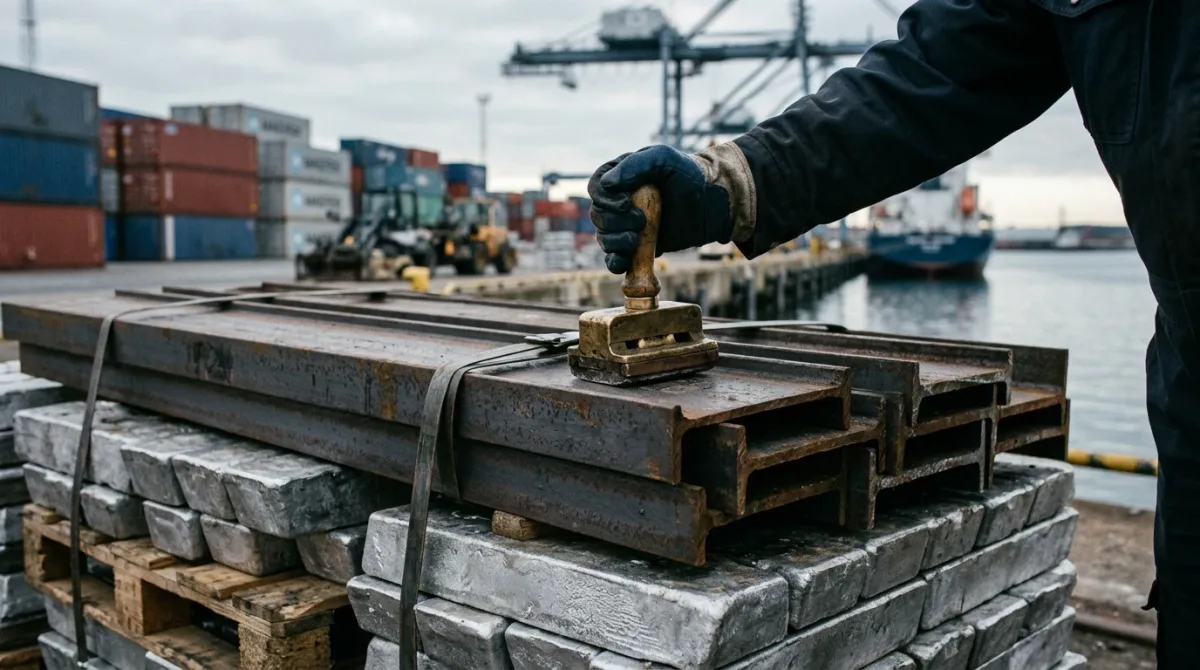
A Section 232 tariff does not start with a presidential tweet. It starts with a 270-day federal investigation and ends with a legal clock that gives the president only 90 days to decide and 15 days to act, per the Bureau of Industry and Security's account of the statute. The steel and aluminum tariffs now running at 25% trace back to that exact sequence.
Who can start a Section 232 investigation?
Three parties can trigger one, according to the Commerce Department's Bureau of Industry and Security: an interested party can file an application, another federal department or agency head can request it, or the Secretary of Commerce can self-initiate. Once launched, the secretary must notify the Secretary of Defense.
The trigger is not economic injury. The statute, the Trade Expansion Act of 1962, asks a narrower question: do imports of a specific article threaten to impair national security. That framing is why BIS's current caseload runs from steel to polysilicon, wind turbines, unmanned aircraft systems and pharmaceuticals rather than a general tariff docket.
What happens during Commerce's 270-day review?
BIS has up to 270 days from initiation to deliver a report to the president. The report assesses domestic production capacity, the health of the affected industry, and whether import volumes or circumstances threaten national security, and it includes a recommendation for action or inaction.
The process includes a Federal Register notice and a public comment period, with the specific comment deadline set case by case, per BIS. The 2017-2018 steel investigation followed this pattern: initiated April 19, 2017, a public hearing on May 24, 2017, a public comment deadline on May 31, 2017, and a completed report on February 16, 2018 — about 10 months, within the statutory limit, according to the Commerce Department's account of the steel investigation.
How long does the president have to decide?
After receiving Commerce's report, the president has up to 90 days to determine whether to concur and what action to take. If the president chooses to act, the statute requires implementation within 15 days of that decision, and the president must submit written reasons to Congress within 30 days of deciding, per BIS's summary of the statutory timeline.
The steel case again shows the clock in practice: Commerce's report landed February 16, 2018, and the presidential proclamation adjusting steel imports followed on March 8, 2018 — 20 days later, well inside the 90-day window. A tariff exclusion process, letting companies request relief from the new duties, was announced March 18, 2018, per the Commerce Department.
| Stage | Statutory deadline | 2017-2018 steel case |
|---|---|---|
| Investigation initiated | — | April 19, 2017 |
| Commerce report to president | Within 270 days | February 16, 2018 |
| Presidential decision | Within 90 days of report | March 8, 2018 |
| Implementation | Within 15 days of decision | March 8, 2018 (same day) |
| Report to Congress | Within 30 days of decision | Not detailed in source |
Sources: Bureau of Industry and Security; U.S. Department of Commerce.
Where do today's steel and aluminum rates come from?
The 25% tariffs currently applied to steel and 25% to aluminum are not the original 2018 numbers. On February 11, 2025, the president signed proclamations that the White House said would "close existing loopholes and exemptions to restore a true 25% tariff on steel and elevate the tariff to 25% on aluminum," according to a White House fact sheet.
The 2025 action ended country exemptions the first Trump administration had granted to Argentina, Australia, Brazil, Canada, Japan, Mexico, South Korea, the European Union, Ukraine and the United Kingdom, per the same fact sheet. It also applied stricter "melted and poured" standards, meaning the tariff can reach a product based on where the metal was originally produced rather than where it was last processed, and expanded coverage to downstream products made from steel and aluminum.
These are the same legal mechanism as 2018 — a Section 232 national security proclamation — used to widen and tighten an existing tariff rather than to open a new investigation.
Why does the national security label matter?
Because it changes what evidence counts. A dumping or subsidy case under separate trade law turns on pricing and government support. A Section 232 case turns on national security, so a Commerce report weighing capacity and defense needs can support tariffs on products, like polysilicon or wind turbines, that have no obvious defense application on their face — a scope the statute allows because the test is impairment of national security, not injury to a domestic industry's finances.
That is also why Section 232 tariffs move faster than most alternatives. The 270-day investigation cap and 90-day presidential decision window are hard statutory limits; a standard antidumping or countervailing duty case can take longer and does not carry the same national security threshold.
What does the data not show?
Neither the BIS nor Commerce material reviewed for this piece specifies a public breakdown of tariff revenue collected or the price effect passed through to buyers of steel or aluminum products; those figures, when published, come from separate government or industry sources and were outside the scope of the process record described here.
FAQ
- Can Congress block a Section 232 tariff before it takes effect? The statute requires the president to report reasons to Congress within 30 days of a decision, per BIS, but the process described in the sources reviewed does not include a congressional vote to approve or block the action beforehand.
- Does every Section 232 investigation end in a tariff? No. Commerce's report can recommend no action, and the president is not required to concur with a recommendation for tariffs, per BIS's description of the process.
- How many Section 232 investigations are active now? BIS's own list includes anthracite coal, robotics and industrial machinery, personal protective equipment and medical devices, wind turbines, unmanned aircraft systems, polysilicon, commercial aircraft and jet engines, pharmaceuticals, and semiconductors.
For a related economy perspective, read How a product gets added to steel tariffs.
For more context, read Complete Guide to Building a Sustainable Wellness Routine.
For more context, read How antidumping duties actually get set.
For more context, read What a federal detention hearing is, and how judges decide.