
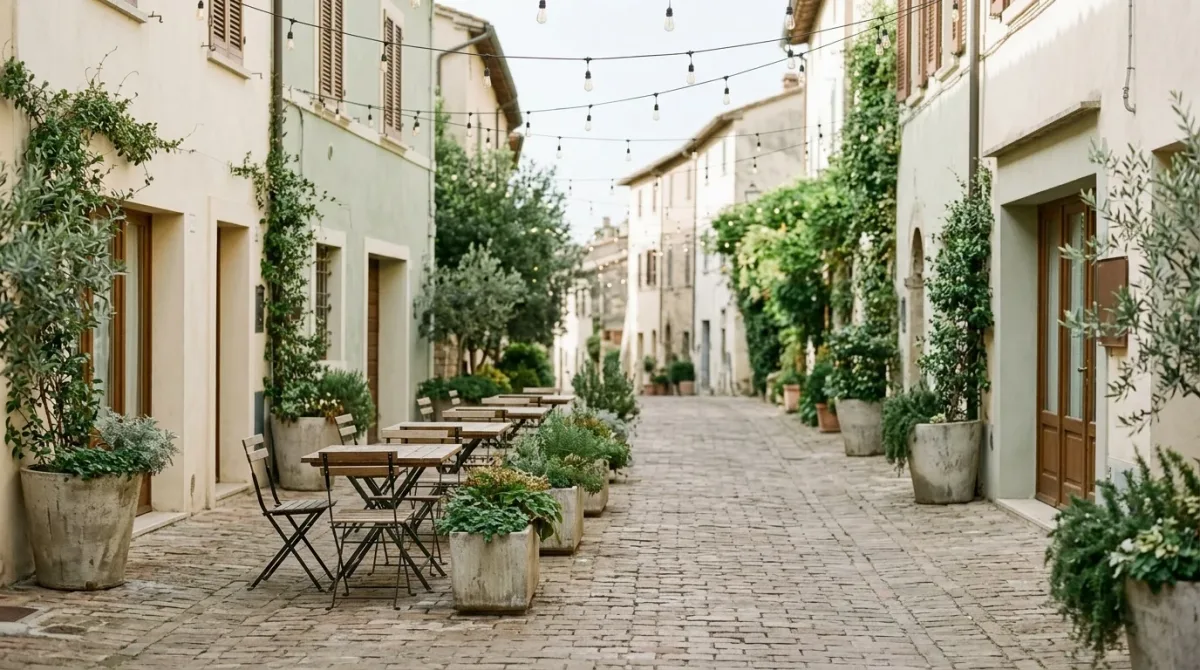
The Newark Avenue Pedestrian Plaza — the two blocks of Newark Avenue between Erie Street and Jersey Avenue in Jersey City's Historic Downtown — closed to cars as a city pilot in 2015 and was made permanent after the city's evaluation found the change had strengthened the corridor's business and foot traffic, per the city's own project announcements and council record. What began as an experiment with planters and paint is now the neighborhood's default gathering place: tables out most of the year, a farmers market in season, festivals on the calendar. A decade in, the plaza reads less like a project and more like the block finally getting the use it wanted.
VIP Jersey Express is an independent news publication covering New Jersey's communities — this guide is built from municipal sources and named coverage, current as of summer 2025.
What is the plaza, exactly?
A car-free stretch of Newark Avenue — the heart of the Village neighborhood, steps from the Grove Street PATH station — where the city removed through-traffic and built a shared pedestrian space: seating, landscaping, performance areas, and the restaurant patios that now define the block. The pilot opened in 2015 under the Fulop administration's public-space program, per the city's announcements at the time, and the city's subsequent capital commitments — permanent lighting, furniture, and surface work — documented the shift from experiment to infrastructure.
What can you actually do there?
The documented calendar and everyday uses, per organizer and city listings:
- Eat on the block: the plaza's patios anchor one of the city's densest restaurant rows — the surrounding blocks hold the neighborhood's pizzerias, taquerias, and cocktail bars that the plaza's foot traffic helped support, per business coverage of the corridor since 2015.
- Farmers market: the Historic Downtown Farmers Market runs on the plaza's edge in season (Grove Street side), per the market association's schedule.
- Festivals: the plaza hosts the neighborhood's street festivals — the Village neighborhood's events among them — per the city's event calendar.
- Nothing at all: the unprogrammed hours are the plaza's real product; tables, shade, and a car-free block two minutes from a Manhattan-bound train.
Why did the city do it — and what happened?
The documented logic: pedestrianizing a low-through-traffic commercial block to concentrate the corridor's nightlife and daytime trade. The documented results, per the city's project follow-ups and named coverage: commercial vacancies on the corridor fell, storefront rents rose with demand, and the block became one of the region's recognized public-space successes — the kind other Jersey cities sent staff to look at. The honest qualifications: the change redistributed parking and traffic to the surrounding grid, which neighborhood drivers noticed, and the plaza's success fed the gentrification pressures Historic Downtown was already carrying — both facts documented in the coverage of the corridor's decade, and neither a reason to pretend the other doesn't exist.
When should you visit?
Weekend evenings run busiest — the patios fill from dinner through late evening. Weekday lunch serves the office crowd more calmly. Festival dates draw the biggest crowds; check the city's event calendar before planning around one. Arrive by PATH (Grove Street station, a two-minute walk) — the plaza's popularity made parking the block's scarcest resource, which is, in a quiet way, the whole design working as intended.
For more context, read Complete Guide to Building a Sustainable Wellness Routine.
For more context, read makeup coverage.
For more context, read Why the low block still beats better teams.