
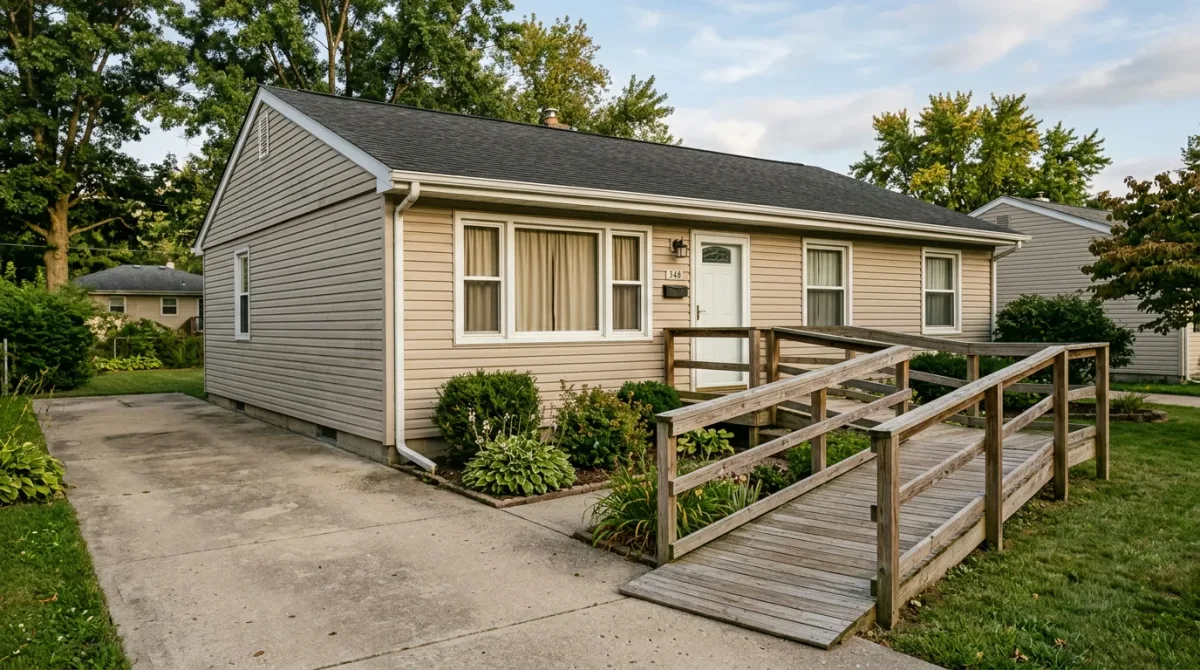
The Department of Veterans Affairs raised the maximum Specially Adapted Housing (SAH) grant to $126,526 and the Special Housing Adaptation (SHA) grant to $25,349 for fiscal year 2026, a 3.87 percent increase over the prior index period, according to a Federal Register notice from the VA. This is not financial or legal advice — grant eligibility depends on the disability categories the VA lists, not a general promise of funding.
What changed for fiscal year 2026: Effective October 1, 2025, veterans and service members who qualify under Section 2101(a) can receive up to $126,526 in aggregate SAH assistance, with a separate Temporary Residence Adaptation (TRA) cap of $50,961 for modifying a family member's home. Those who qualify under Section 2101(b) — the SHA track — can receive up to $25,349, with a TRA cap of $9,099. A related grant under Section 2102B, for veterans with certain vision, respiratory, or burn-related disabilities, tops out at $116,084, an amount the VA secretary can waive upward in some cases.
| Grant type | FY 2026 maximum |
|---|---|
| SAH (Section 2101(a)) | $126,526 |
| SAH temporary adaptation (TRA) | $50,961 |
| SHA (Section 2101(b)) | $25,349 |
| SHA temporary adaptation (TRA) | $9,099 |
| Section 2102B assistance | $116,084 |
These are federal caps that apply nationwide; how much of a project a grant actually covers still depends on the scope and cost of the specific adaptation.
How the VA adjusts these caps every year
The increase isn't discretionary. Under 38 U.S.C. §§ 2102(e), 2102A(b)(2), and 2102B(b)(2), the VA must compare the Turner Building Cost Index — a residential construction-cost measure — for the most recent calendar year against the year before. If the index rose, every SAH, SHA, and Section 2102B cap rises by that same percentage. If the index held flat or fell, the caps don't move. For FY 2026, the VA cited a 3.87 percent index increase as the basis for the new amounts.
What it means if you're applying
The VA's disability housing grants program covers veterans and service members with qualifying service-connected disabilities, including loss or loss of use of limbs, severe bilateral blindness, certain burns, and — after a recent expansion the VA has publicized — degenerative conditions such as ALS or Parkinson's disease when service caused or aggravated them. Applicants can draw on their approved grant across up to six uses over their lifetime rather than spending it all at once, which matters for anyone planning modifications in stages as needs change. Since the program began in 1948, VA has issued more than 53,500 of these grants totaling roughly $2.2 billion, with about 2,352 awarded in 2024 alone — a scale that reflects a permanent benefit, not a one-time appropriation. Because eligibility categories and exact dollar limits are set in statute and regulation, anyone applying should confirm current requirements directly with VA rather than relying on a general summary.
For a related accessibility news perspective, read ADA, Fair Housing Act, or ANSI: Which Accessibility Standard Actually Applies to Your Home.
For more context, read Complete Guide to Building a Sustainable Wellness Routine.