
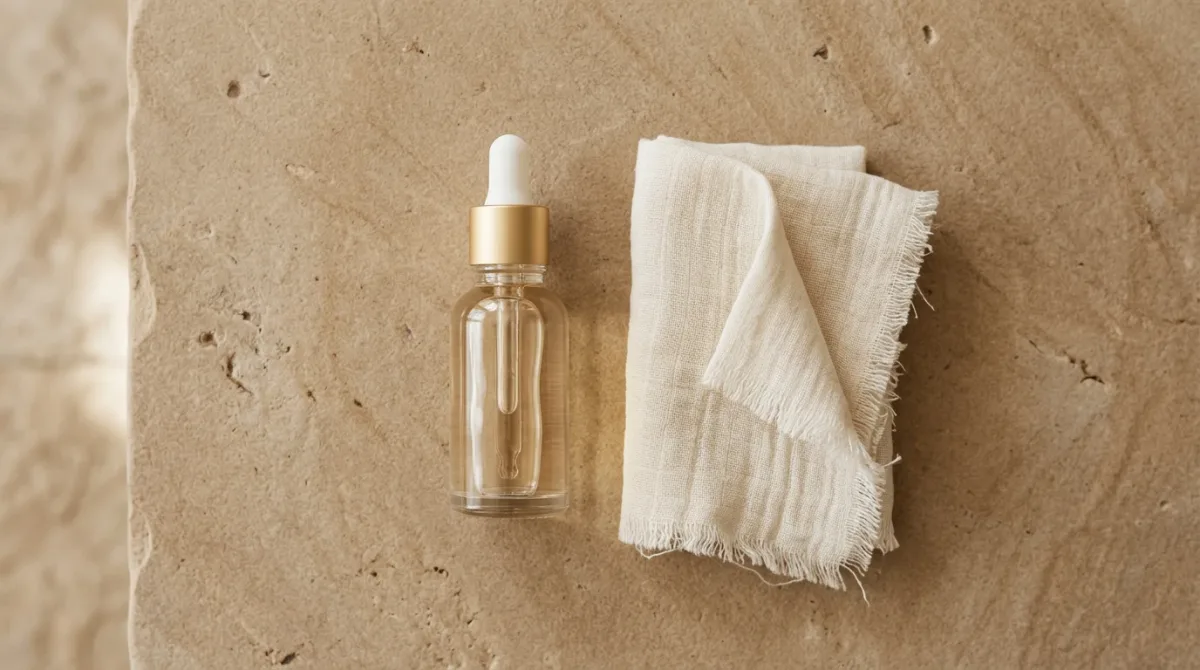
Niacinamide is a form of vitamin B3 that dermatologists use to calm oily and acne-prone skin, fade dark spots, and reinforce the skin's moisture barrier, and it shows up in most formulas at a concentration of 2% to 5%. It's one of the few actives gentle enough to sit next to almost anything else in a routine, which is a large part of why it turns up in so many bottles.
What is niacinamide, exactly?
Niacinamide, also called nicotinamide, is a water-soluble, amide form of vitamin B3 that the body uses for basic cell function and energy metabolism, according to Baylor College of Medicine's Department of Dermatology. In skincare, it's formulated into serums, moisturizers, and toners rather than taken as a pill, though an oral form exists and is handled differently (more on that below).
A 2024 study in the Journal of the American Academy of Dermatology, cited by Baylor, found that oral niacinamide had preventive value against new skin cancers in people who had already had a non-melanoma skin cancer. That's a distinct use case from the topical serums this guide covers, and it's a decision for a patient and their doctor, not a routine swap.
Does niacinamide actually control oil?
The evidence points to yes, with a caveat. A literature review published in the dermatology journal Cosmoderma states that niacinamide "lowers" sebum production in people with acne vulgaris, and separately supports niacinamide's role in reducing inflammation associated with breakouts. Healthline's review of the research is more measured, noting that niacinamide "may help regulate the amount of oil the sebaceous glands produce" and "could be helpful for people with oily skin, though more research is necessary." Read together, the two sources agree on direction — less oil, calmer breakouts — without promising a dramatic before-and-after change.
Can it fade dark spots and even out tone?
This is one of niacinamide's better-supported jobs. The Cosmoderma review attributes the lightening effect to niacinamide's "inhibition of melanosome transfer" — it interferes with the process that moves pigment from melanin-producing cells into the surface skin cells, which is what makes dark spots look dark. Healthline separately confirms niacinamide "can be helpful for treating skin hyperpigmentation or pigmentation disorders." Neither source claims it erases a spot outright; the honest framing is gradual evening, not removal.
What does it do for the skin barrier?
The Cosmoderma review is specific here: topical niacinamide "adjuvants ceramides, free fatty acids, and cholesterol synthesis in keratinocytes," which is the technical way of saying it helps skin cells produce more of the lipids that hold the barrier together. Healthline echoes this in plainer terms, noting research suggests niacinamide "could help support the skin's ceramide (lipid) barrier," the layer that keeps moisture in and irritants out. That barrier-building role is why niacinamide is often recommended for skin that's reactive, over-exfoliated, or just generally sensitive, rather than only for oily or pigmented skin.
What concentration should you look for?
Most consumer formulas land between 2% and 5%, per the Cosmoderma review, and Healthline notes that "5% niacinamide can be effective in treating fine lines and wrinkles" specifically. Baylor's guidance is to apply it in serum form after cleansing and before moisturizer, at a concentration under 5% for daily use. There's no dermatology consensus that a higher percentage works faster — going past what a formula is designed for mostly raises the odds of irritation, not results.
| Question | What the sources say |
|---|---|
| Best concentration | 2%-5% for topical use (Cosmoderma, Healthline) |
| Time to see results | Most research reviewed looked at 4 to 12 weeks of use (Healthline) |
| Pairs well with | Retinol and vitamin C, per Baylor's dermatology team |
| Oral dosing ceiling | Under 1 gram a day; not for people with certain liver, ulcer, or diabetes conditions (Baylor) |
How do you add it to a routine?
- Start after cleansing, before moisturizer. Apply a niacinamide serum to clean, dry skin, following Baylor's guidance on where it sits in a routine.
- Give it four to twelve weeks before judging it. Healthline notes most of the research it reviewed tracked niacinamide use over that window, not days.
- Patch-test first if your skin reacts easily. Healthline recommends this step before working any new topical into a full-face routine.
- Layer it with retinol or vitamin C if your skin tolerates both. Baylor's dermatology team notes niacinamide works well alongside these actives — skip this pairing on nights when your skin already feels tight or reactive.
Common mistakes
The most common misstep is treating niacinamide like a fast fix and abandoning it inside of two weeks — the research both Healthline and Cosmoderma point to tracks results over a month or more. The second is reaching for the oral supplement to solve a cosmetic concern: Baylor's guidance caps oral niacinamide at under 1 gram daily and flags it as unsuitable for people with severe liver disease, active peptic ulcers, or certain diabetes conditions, which makes it a conversation for a doctor, not a routine decision.
FAQ
Is niacinamide the same as niacin?
No. Niacinamide is one specific form of vitamin B3 — the one used in topical skincare and in the oral-dosing guidance Baylor's dermatology team outlines. "Niacin" is a separate, related term, and the two aren't interchangeable in a routine.
Can I use niacinamide every day?
Most formulas under 5% are designed for daily use, applied after cleansing and before moisturizer, per Baylor's dermatology guidance. If irritation shows up, easing to every other day is a reasonable adjustment.
Will niacinamide clear my acne on its own?
The sourced research points to niacinamide lowering oil production and inflammation, which can support an acne routine, but neither Healthline nor the Cosmoderma review frames it as a standalone acne treatment.
Can I use niacinamide with retinol?
Yes — Baylor's dermatology team notes the two work well together. If your skin is new to retinol, introduce one active at a time so you can tell what's causing any irritation.
For a related business news perspective, read e.l.f. and Bubble's hybrid line bets on skin-first makeup.
For more context, read Complete Guide to Building a Sustainable Wellness Routine.
For more context, read makeup coverage.
For more context, read What Is the Skin Barrier, Actually? A No-Nonsense Primer.